CURRENT STAGE · PHYSICAL PROTOTYPES & LOCAL PREVIEW PREP

DEVELOPMENT

Reactor Realms is in hands-on prototype development: printing and testing physical cards, working through local production options, and putting the rules through real tabletop matches before a broader release.

Collapsed Archive
Where the project is now

From the Card Studio to the kitchen table.

The current work is not a mockup-only phase. Cards are being printed, cut, handled, sleeved, shuffled, and played so problems can be found before a larger physical release.

Current development loop: design → print → inspect → play → adjust → print again.
  • Home-printing card faces and backs to check readability, trim, bleed, color, and physical feel.
  • Playing real matches with the current rules to test AP pacing, Settlements, combat, Dragons, and deck composition.
  • Using the free web Preview to let more people learn the game while the physical product continues to mature.
  • Preparing public Community sharing and future Untap.in instructions for broader testing.
Home-printed Reactor Realms prototype card backs
Home-printed prototype card backs — checking print quality and physical presentation.
Home-printed Reactor Realms prototype card faces
Prototype card faces — checking frames, text, art, stats, and readability at real card size.
Reactor Realms tabletop playtest in progress
Tabletop playtesting — the current rules are being tested as an actual game, not only in spreadsheets.
AI development disclosure

Human-led creation. AI-assisted tools.

Reactor Realms is not the output of a one-click game generator. It is a long-term independent project built through years of worldbuilding, rules design, card data, software development, visual direction, printing, testing, revision, and production work. AI is one tool inside that larger process.

Reactor Realms Card Studio showing CSV-driven card data, the current card layout, art, design, booster, tournament, MPC, TGC Poker, and layout production tabs
The Reactor Realms Card Studio. This is custom project software built to organize and produce the game: card data, metadata, art selection and review, layouts, print exports, booster and tournament tools, production files, and vendor/API workflows.
HOW AI IS USED

Assistance inside a larger toolchain

  • Brainstorming, drafting, rewriting, coding assistance, and repetitive-data work.
  • Visual concept generation and iteration under project-specific prompts, metadata, faction identities, and art direction.
  • Image analysis for composition and advertising workflows, plus local narration and other production experiments.
  • Helping search, compare, organize, and review a large amount of game-development information faster than one person could manually.
WHAT STAYS HUMAN-LED

Direction, judgment, testing, and approval

  • The world, lore direction, game rules, factions, card identities, product decisions, and overall creative goals are defined by the creator.
  • Generated or assisted outputs are reviewed, selected, rejected, corrected, reworked, and integrated rather than accepted automatically.
  • Cards are physically printed and played. Balance and usability are judged through real tabletop testing, not only AI output.
  • Final publishing, production, and release decisions remain human decisions.
Why tools like this matter

Technology can lower barriers to making something real.

AI has real limitations and should be used thoughtfully, but it can also be an accessibility and opportunity tool. For independent creators — including people with disabilities, learning or attention differences, limited time, limited money, or skills that are strong in one area and weaker in another — assistive tools can make parts of a large creative project possible that might otherwise be out of reach.

That does not remove the work. It changes what one person can reasonably attempt: building custom software, keeping hundreds of card records consistent, exploring visual ideas, revising writing, preparing production files, testing alternatives, and learning unfamiliar parts of development without needing a full studio staff.

The Reactor Realms development process
1Vision & LoreWorldbuilding, rules, mechanics, factions, and card concepts establish the direction.
2Custom Studio ToolsStructured data, metadata, layouts, art workflows, exports, and production systems keep the project organized.
3AI-Assisted IterationAI helps explore, draft, analyze, generate, and automate within project-defined constraints.
4Human ReviewResults are selected, corrected, rejected, refined, and approved by the creator.
5Prototype & TestCards are printed, handled, played, balanced, and revised through real testing.
6Release PrepWebsite, ads, print files, packaging, vendors, and final products are prepared for players.
Transparency: AI-assisted elements may appear in visual development, text iteration, software/code work, and production workflows. The project does not present AI as an autonomous creator. Reactor Realms is a directed, reviewed, tested, and continuously revised independent work, with AI used as one of several development tools.
About the creator

Built from real life, in Cheyenne, Wyoming.

Reactor Realms is being created by William McCollom — an independent game designer, husband, father of six, and lifelong gamer building the project one piece at a time.

What began as an idea for a card game grew into five distinct Realms, hundreds of card concepts, physical prototypes, original lore, custom development tools, packaging, and a game now preparing to reach its first public players.

The five Realms are not direct copies of the people in my life, but family has shaped the way I think about them. People can share the same home, history, and struggles while still developing completely different personalities, strengths, fears, beliefs, and ways of facing the world.

A lot of Reactor Realms comes from those differences — and from my own experiences with responsibility, setbacks, rebuilding, perseverance, and trying to create something better from what is available.

Why I keep building

Something bigger than one game.

I have built Reactor Realms while living the same kind of life many families live every day — working, raising children, paying bills, trying to make ends meet, and still finding enough time and energy to make something meaningful.

Part of my goal is to create opportunities for my family and to leave behind something positive that can keep opening doors beyond the years I personally spend building it. Reactor Realms is about building with what you have, learning when something fails, and continuing anyway.

Why the Preview is free

The game should not begin behind a large price tag.

Not every family can afford an expensive trading card game. That is one reason the Reactor Realms Preview is available through free browser-generated Print & Play PDFs.

If a family can download the cards, take the files to a local print shop, have them printed and cut, and sit down together to play, I want them to be able to do that. Professionally manufactured products can support the project, but being short on money should not automatically mean being excluded from the table.

The world of Reactor Realms is filled with people trying to survive what came before them, protect what they still have, and build something better from what remains. Maybe that is why this world has always felt personal.

Reactor Realms is being built in Cheyenne, Wyoming — one card, one playtest, and one Realm at a time.
Original prototype · 2012

The project began long before the current Realms.

This surviving 2012 card-layout prototype is one of the earliest pieces of the project. It is preserved here exactly as development history, not as a current Reactor Realms card.

The prototype used four tracked resources — Space, Energy, Money, and Supplies — alongside Attack Points, Moral, and Defense Points. Its card categories were labeled Unit, Event, Ability, and Equipment.

2012 PROTOTYPEOriginal early layout · archived for development history.
Original 2012 card layout prototype showing Space, Energy, Money, Supplies, Attack Points, Moral, and Defense Points
Original 2012 prototype image. The mechanics, terminology, visual language, and card structure were rebuilt extensively on the road to Reactor Realms.
Faction & people timeline

See how the peoples and Realms changed over time.

The public creative timeline follows the major visual and worldbuilding milestones that shaped Thornbound, Gloomborn, Duskforged, Sunshatter, Starweave, and the older First Age peoples.

Development archive

Reactor Realms did not start here.

These are surviving card renders from an earlier Reactor Realms build. The frames, terminology, rules presentation, icon language, and even some card roles changed as the game moved from an early Untap.in test set toward the current physical prototype.

They are shown here as development history, not as current playable cards. Keeping the old work visible makes it easier to see how much of the game was tested, rebuilt, and refined instead of appearing fully formed overnight.

ARCHIVED DESIGNOld rules and layouts shown for comparison only.Browse the old Untap.in card archive ↗
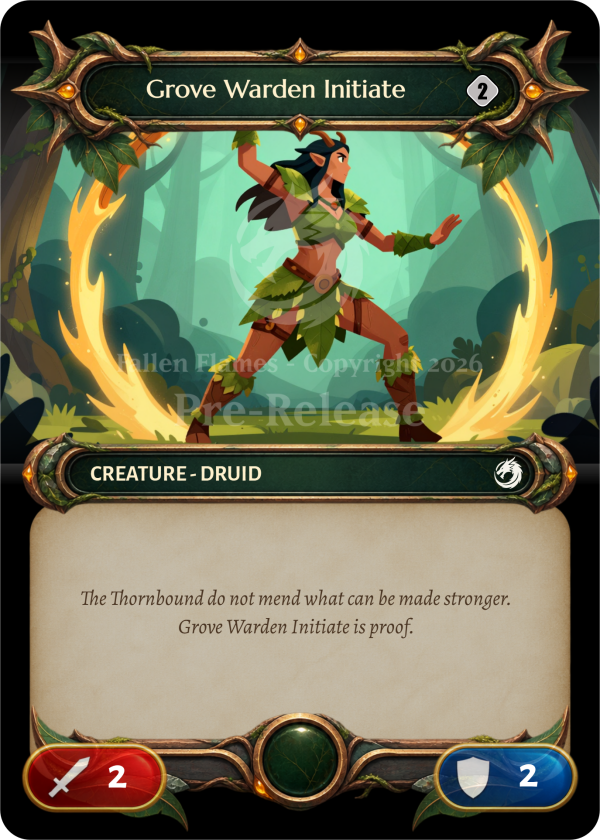
Archived Grove Warden Initiate card from an earlier Reactor Realms build
Grove Warden InitiateEarly Thornbound creature frame
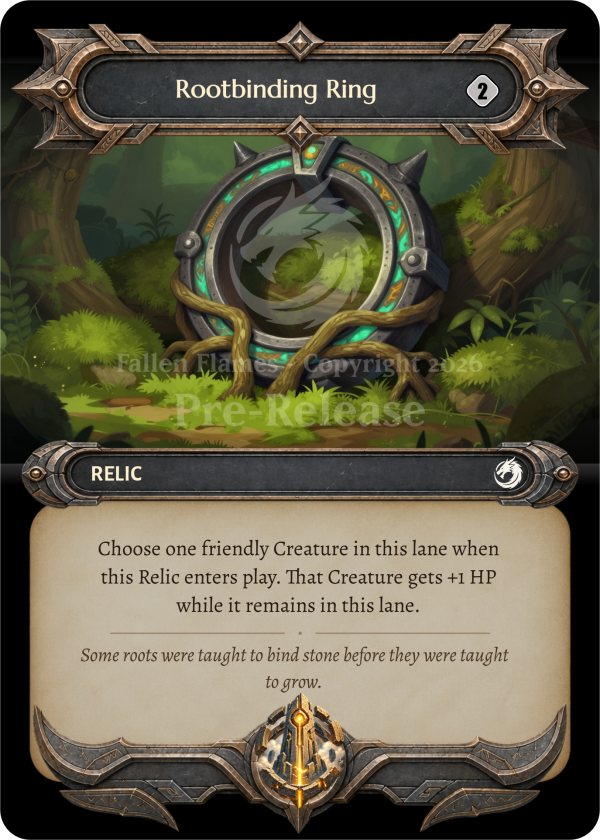
Archived Rootbinding Ring card from an earlier Reactor Realms build
Rootbinding RingEarly support-card layout
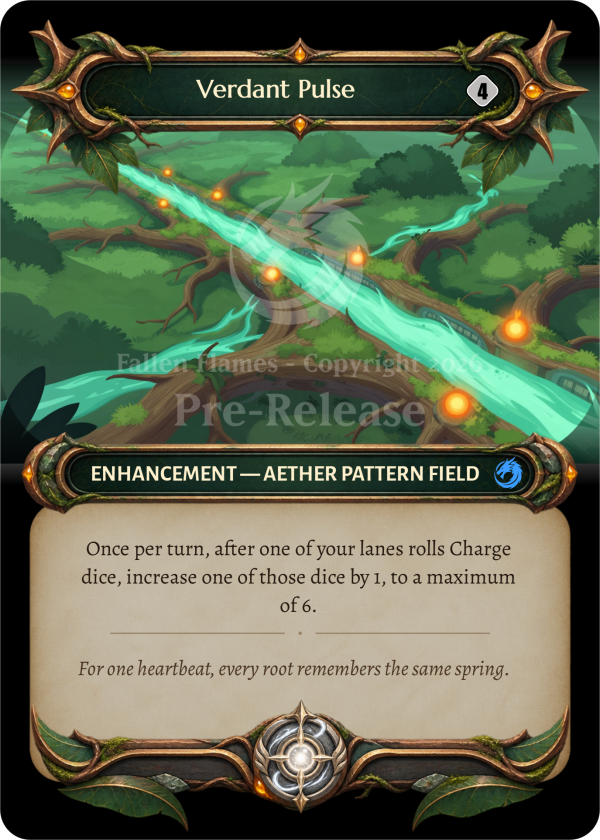
Archived Verdant Pulse card from an earlier Reactor Realms build
Verdant PulseEarlier action / effect presentation
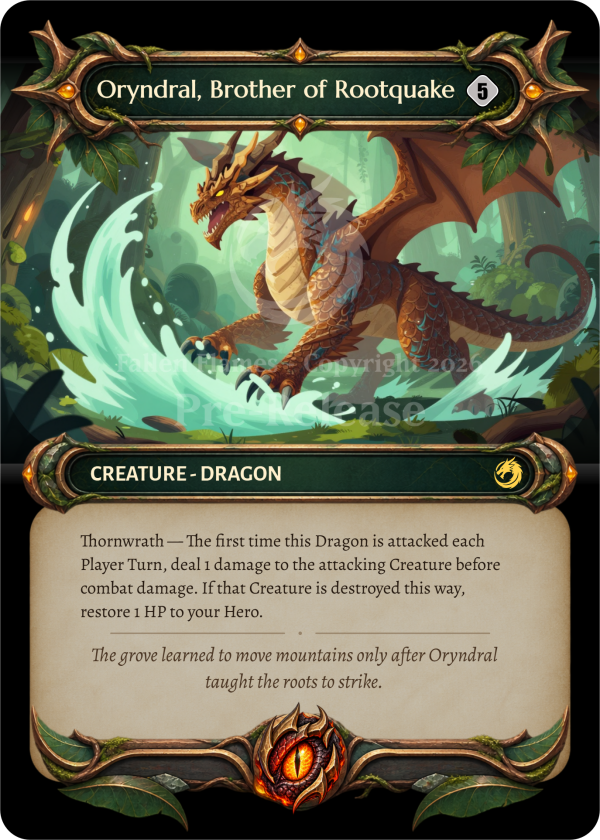
Archived Oryndral Brother of Rootquake card from an earlier Reactor Realms build
OryndralEarlier Dragon guardian design
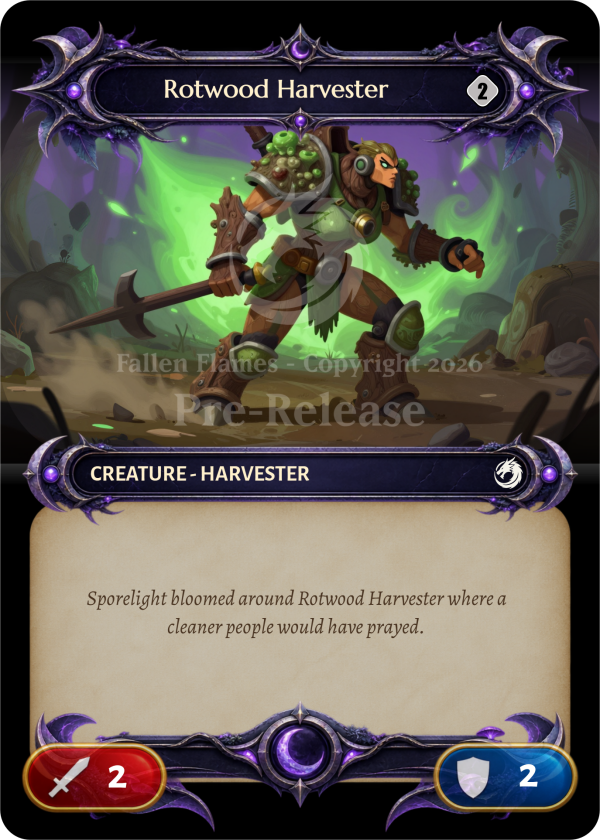
Archived Rotwood Harvester card from an earlier Reactor Realms build
Rotwood HarvesterEarly Gloomborn creature frame
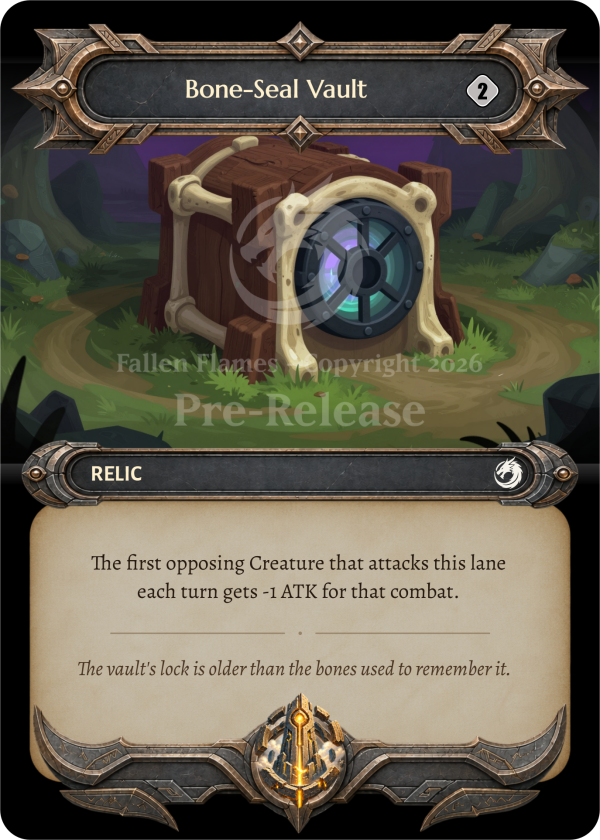
Archived Bone-Seal Vault card from an earlier Reactor Realms build
Bone-Seal VaultEarlier support-card layout
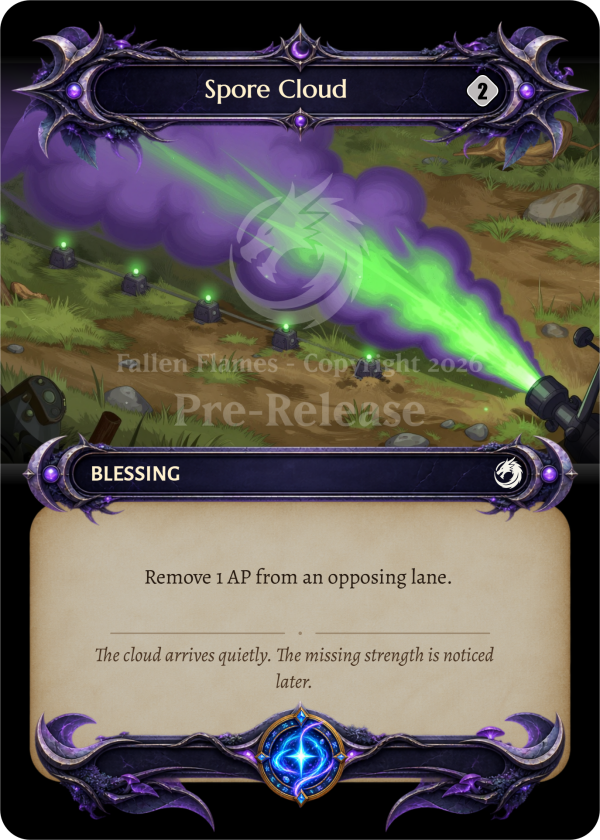
Archived Spore Cloud card from an earlier Reactor Realms build
Spore CloudEarlier action / effect presentation
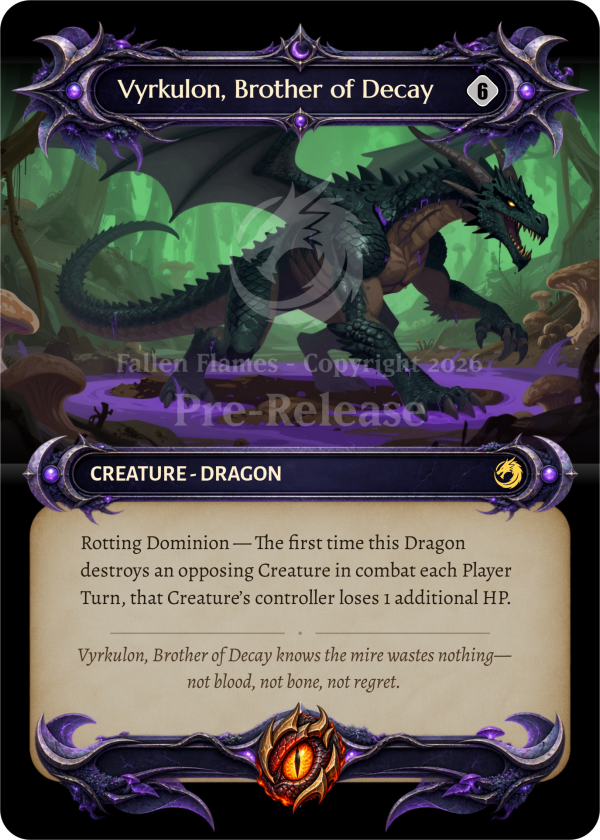
Archived Vyrkulon Brother of Decay card from an earlier Reactor Realms build
VyrkulonEarlier Dragon guardian design
Current public build

Public Preview

Rules are versioned: current playtest changes and superseded wording are preserved in the Rules History.

Thornbound and Gloomborn remain the two public Preview factions. Each free faction deck contains 42 cards total. 2 of the 42 are Guardian Dragons that are set aside during setup; the remaining 40 cards form the Silverpool. Settlements are shuffled into the Silverpool and are not a separate card pool.

Community Vault

Community tools are being opened carefully.

The Community hub is useful even without public posting: players can reach the free game, private feedback, development updates, and the Card Forge. When the shared Community backend is connected, the Vault also supports public concepts, optional artwork, voting, and share links.

Physical development

Home prototypes first.

Current physical work is focused on printing and testing at home. Kickstarter and larger manufacturing come after the cards, rules, and presentation have survived enough real play.