Objective
Protect your shared Dragon / Silverpool life total while reducing the opposing player's shared total to 0 through creatures, Settlement pressure, and legal card effects.
Setup
- Each First Clash faction deck contains 42 cards total.
- Set aside the 2 Guardian Dragons. They are included in the 42-card faction deck but are not shuffled into the Silverpool.
- Shuffle the remaining 40 cards to form your Silverpool. Settlements and Reactors are cards within the Silverpool; Settlements are not kept in a separate Builder Pool.
- Draw 7 cards.
- Reactor Mulligan: if the opening 7 has no Reactor, you may reveal it, shuffle it back into the deck, and draw a new 7-card hand once without reducing your hand size. Keep the second hand even if it also contains no Reactor.
- The player taking the first turn skips only their first normal Draw Step.
Turn Structure
- Draw: resolve the Draw Step first. The active player may Draw or Skip Draw. The player taking the first turn must skip their first normal Draw Step.
- Untap / Upkeep: ready cards that normally untap, clear expired AP from your previous turn, and resolve beginning-of-turn upkeep effects.
- Mine Phase: mine up to one built Reactor already on your battlefield. Mining taps that Reactor and generates its printed AP.
- Build Phase: build up to one Settlement or one Reactor from your hand. Instead, you may rebuild one damaged Settlement by paying AP equal to that Settlement's printed DEF.
- Action Phase: play one Creature, Relic, or Enhancement if you can pay its AP cost and meet its requirements.
- Combat: declare attackers; the defender assigns blockers.
- End Phase: resolve end-of-turn effects. If your hand contains more than 7 cards, discard down to 7. Damage marked for the turn clears according to normal cleanup.
- End: finish the turn and pass play to the opponent.
Reactors & AP
Reactors are persistent infrastructure. A Reactor is built from your hand during the Build Phase; it is not the same thing as mining it.
AP is not a permanently banked resource across turns.
Settlements & Creature Capacity
- Settlements are shuffled into the Silverpool and drawn normally.
- Build a Settlement from your hand during the Build Phase.
- Maximum four Settlements may be on your battlefield.
- Each active Settlement provides base Creature Capacity 2. Four active Settlements provide the normal base maximum of eight Creatures.
- Settlements have DEF and no ATK.
- When a Settlement is destroyed, do not remove it from play. It remains on the battlefield tapped/damaged.
- A damaged Settlement provides no Creature Capacity until it is rebuilt.
- During your Build Phase, you may rebuild only one damaged Settlement per turn by paying AP equal to that Settlement's printed DEF. Rebuilding readies/restores that Settlement.
- Relics can increase the Creature Capacity of individual Settlements.
Card Types
| Type | Role / normal timing |
|---|---|
| Creature — <Class> | Battlefield unit with ATK / DEF. Normally played during the Action Phase. |
| Reactor | Persistent AP infrastructure. Build it during the Build Phase; mine an already-built Reactor during the Mine Phase. |
| Settlement | Silverpool structure with DEF and base Creature Capacity 2. Build it during the Build Phase. |
| Relic | Persistent modifier, often attached to a Settlement. Normally played during the Action Phase. |
| Enhancement | Persistent, stackable effect or AP-trigger modifier. Normally played during the Action Phase. |
| Blessing | AP-paid effect that may be used at a legal timing window after Untap / Upkeep; it does not consume the normal Action Phase play. |
Guardian Dragons are included in the 42-card faction deck, then set aside before the 40-card Silverpool is shuffled.
Card Guide With Pictures
If you are new to Reactor Realms, use this picture guide first. Each card type looks different and plays a different role on the battlefield.
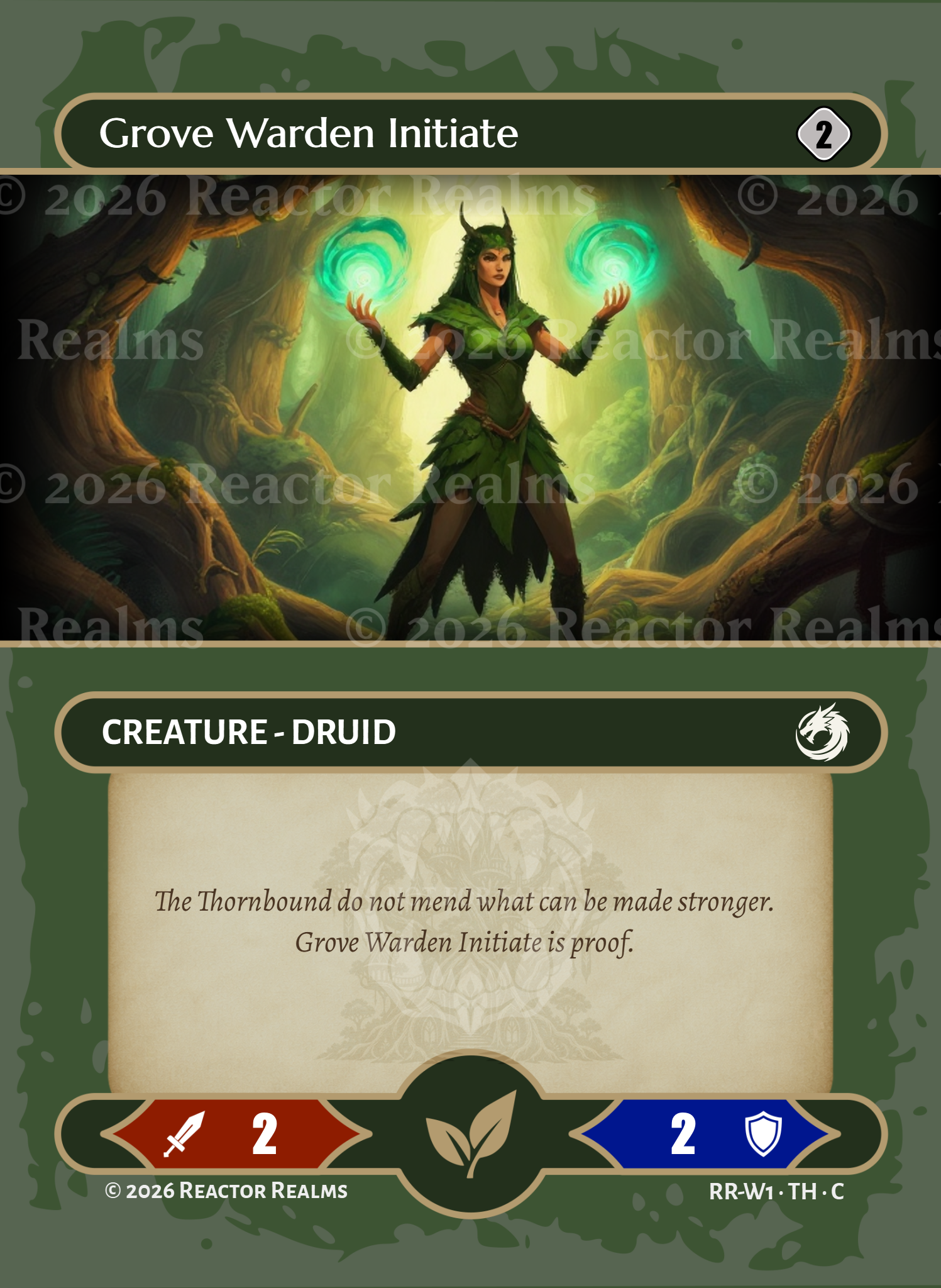
Creatures fight for you.
Creatures enter the battlefield, attack, block, and take part in combat. Their ATK is shown on the left and DEF on the right.
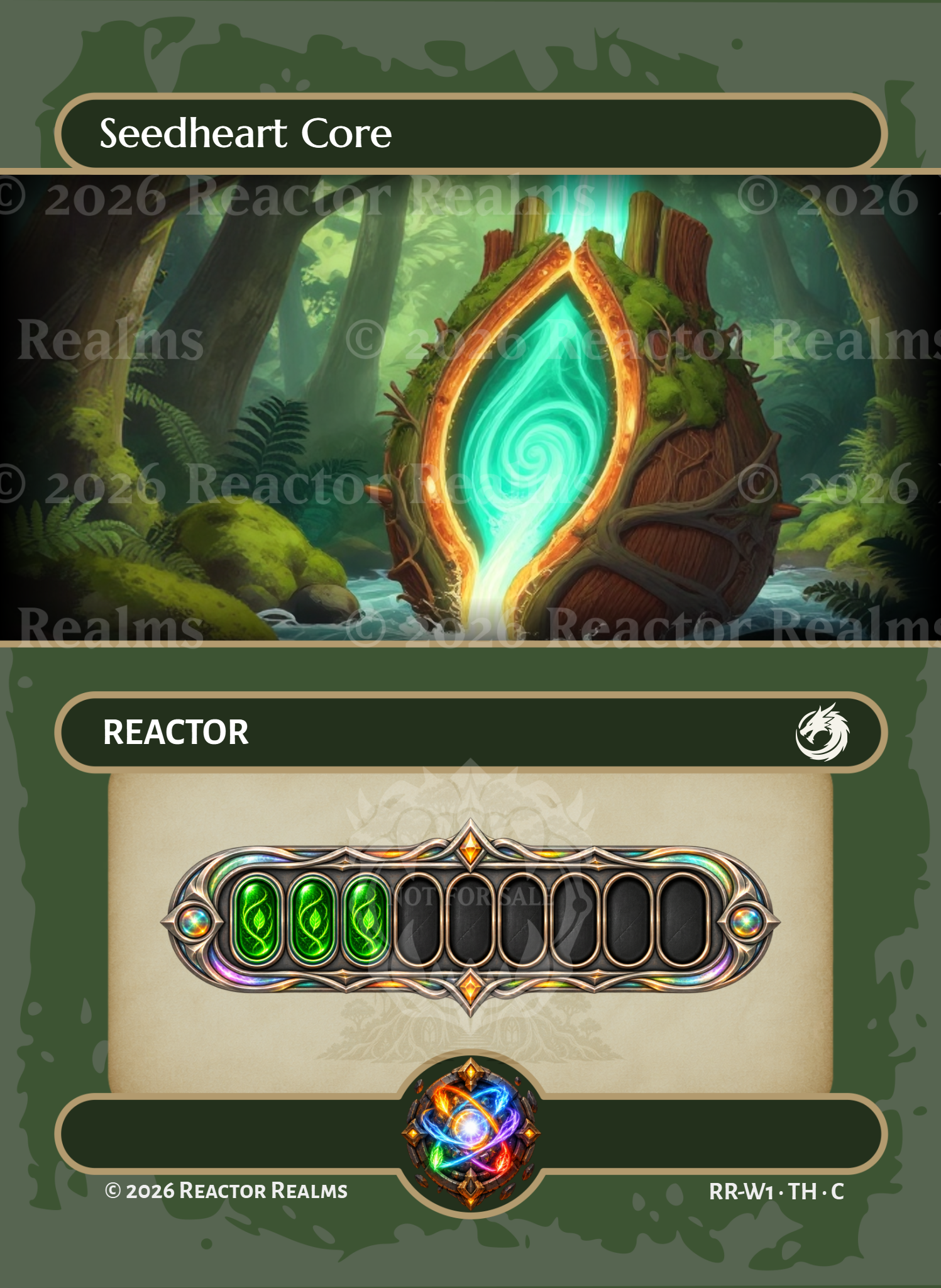
Reactors generate AP.
Build Reactors from your hand during the Build Phase. On a later Mine Phase, mine up to one already-built Reactor to gain its printed AP.
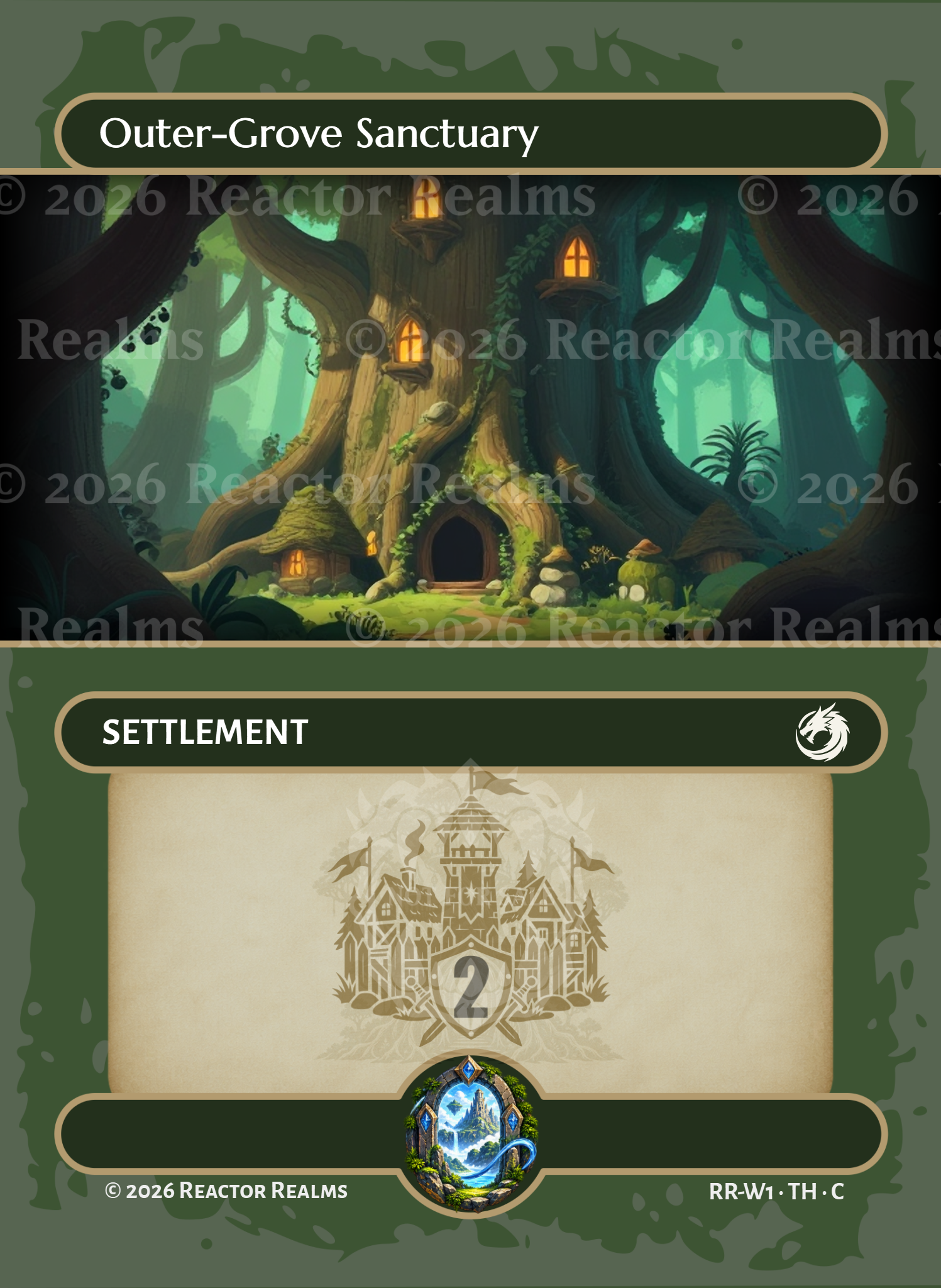
Settlements define your board.
Settlements are shuffled into your Silverpool and drawn normally. Build them during the Build Phase. They have DEF and base Creature Capacity 2.
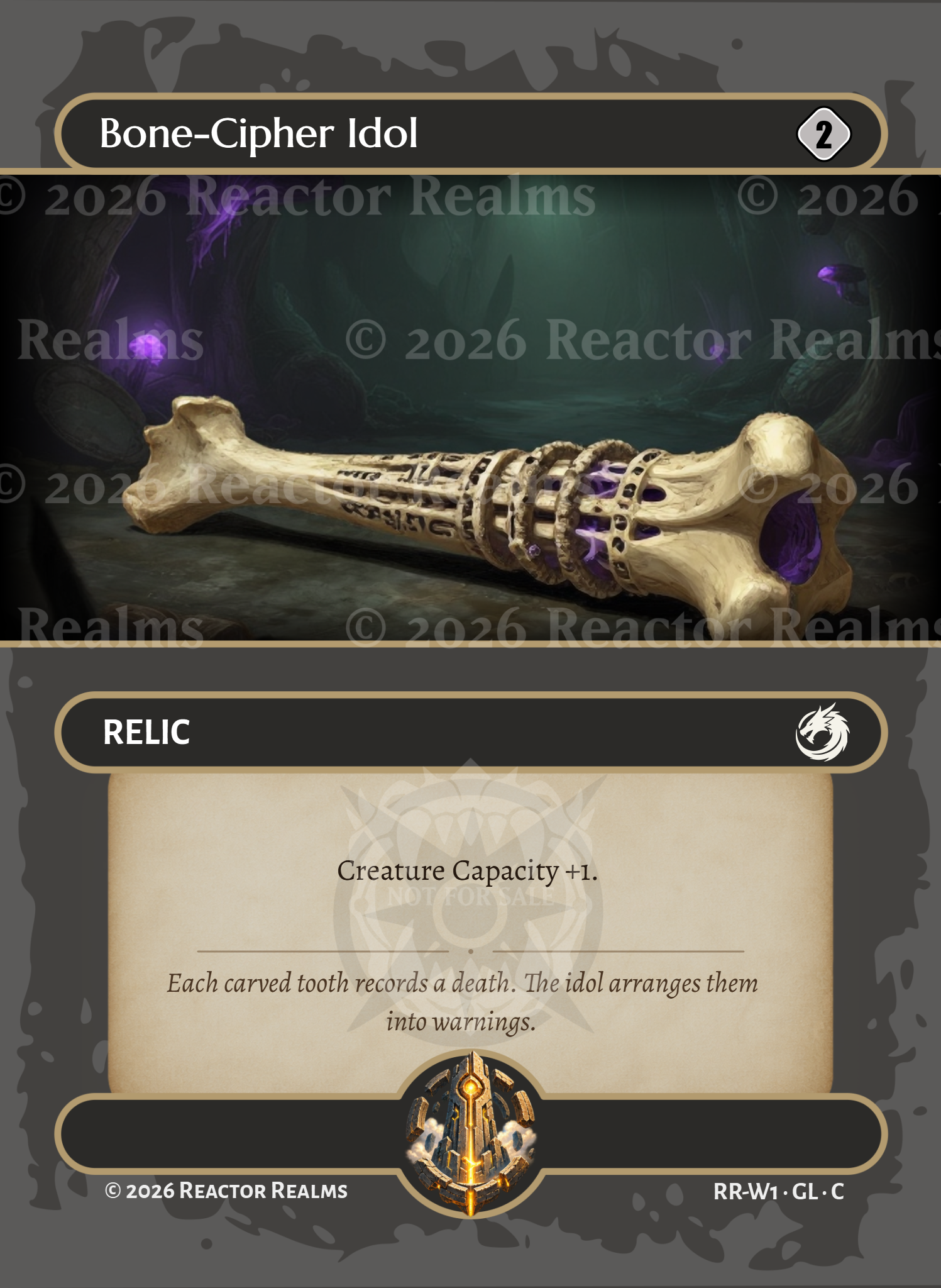
Relics improve Settlements.
Relics are persistent items, usually attached to a Settlement. They can increase creature capacity and grant additional abilities or bonuses.
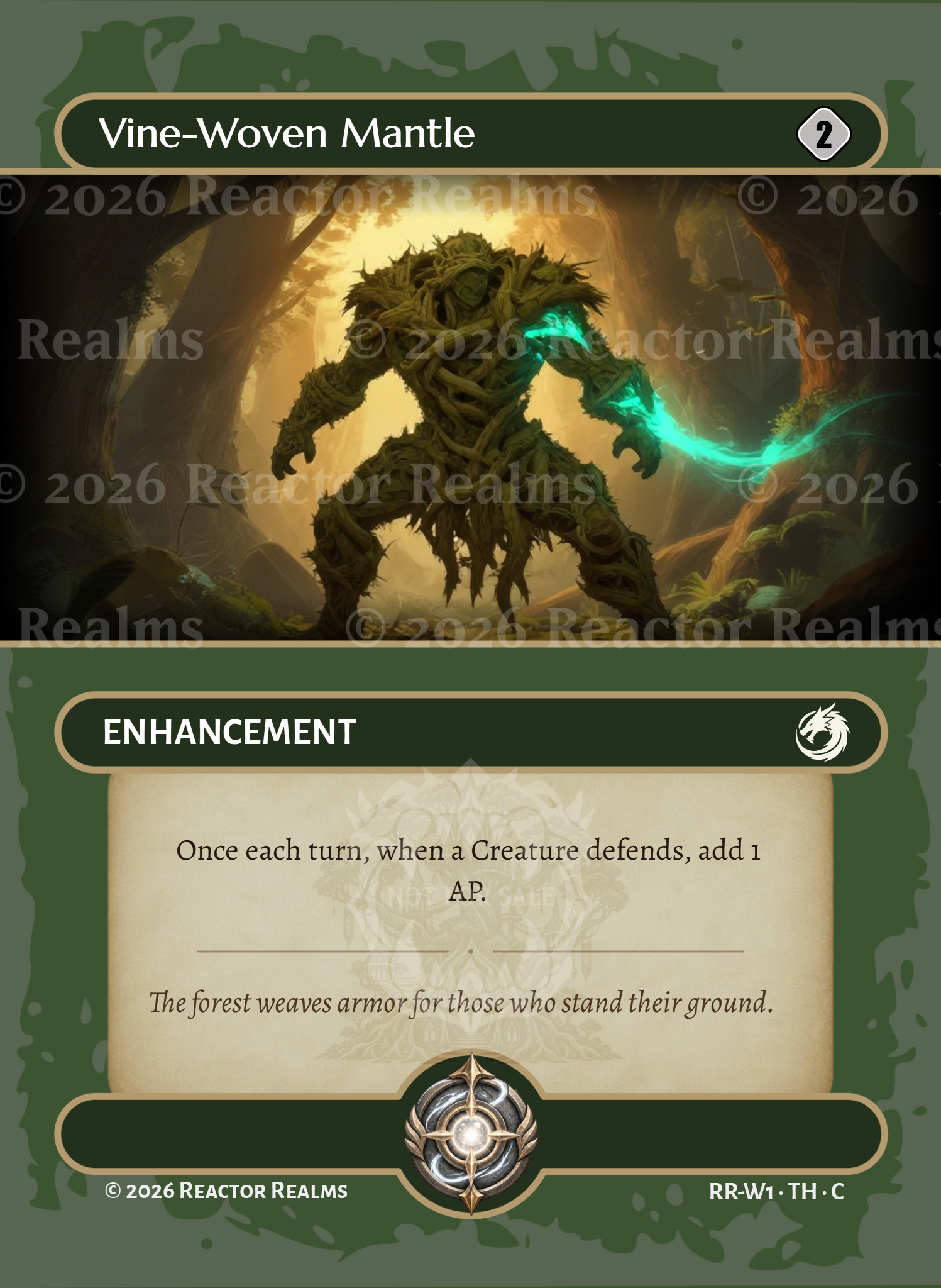
Enhancements provide ongoing effects.
Enhancements are persistent aura-style cards. They stay in play and can improve your board state or reward certain actions, including AP-related triggers.
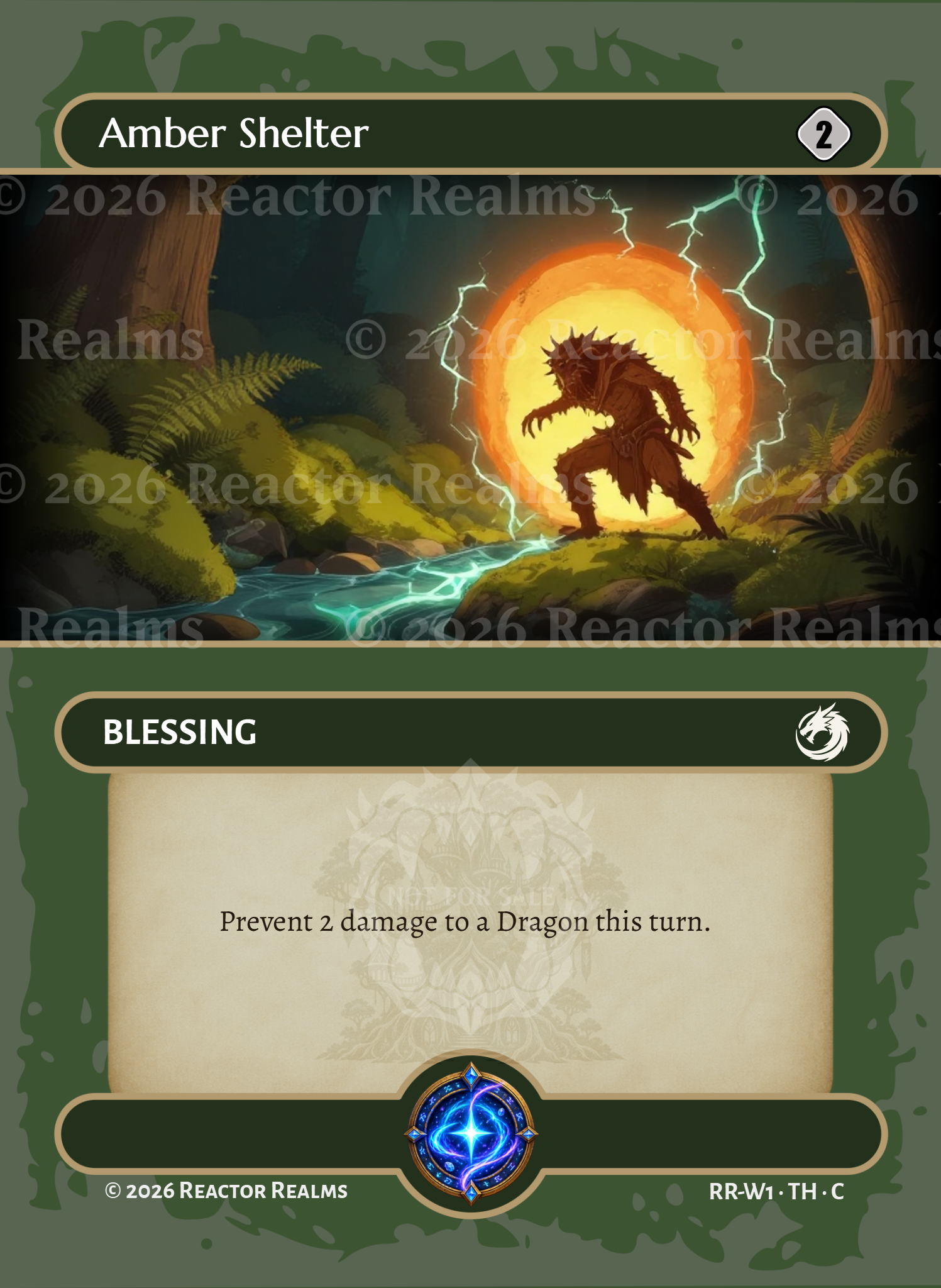
Blessings are direct effect cards.
Blessings are AP-paid tactical effects. After Untap / Upkeep, they may be used at legal timing windows without consuming the normal Action Phase play.
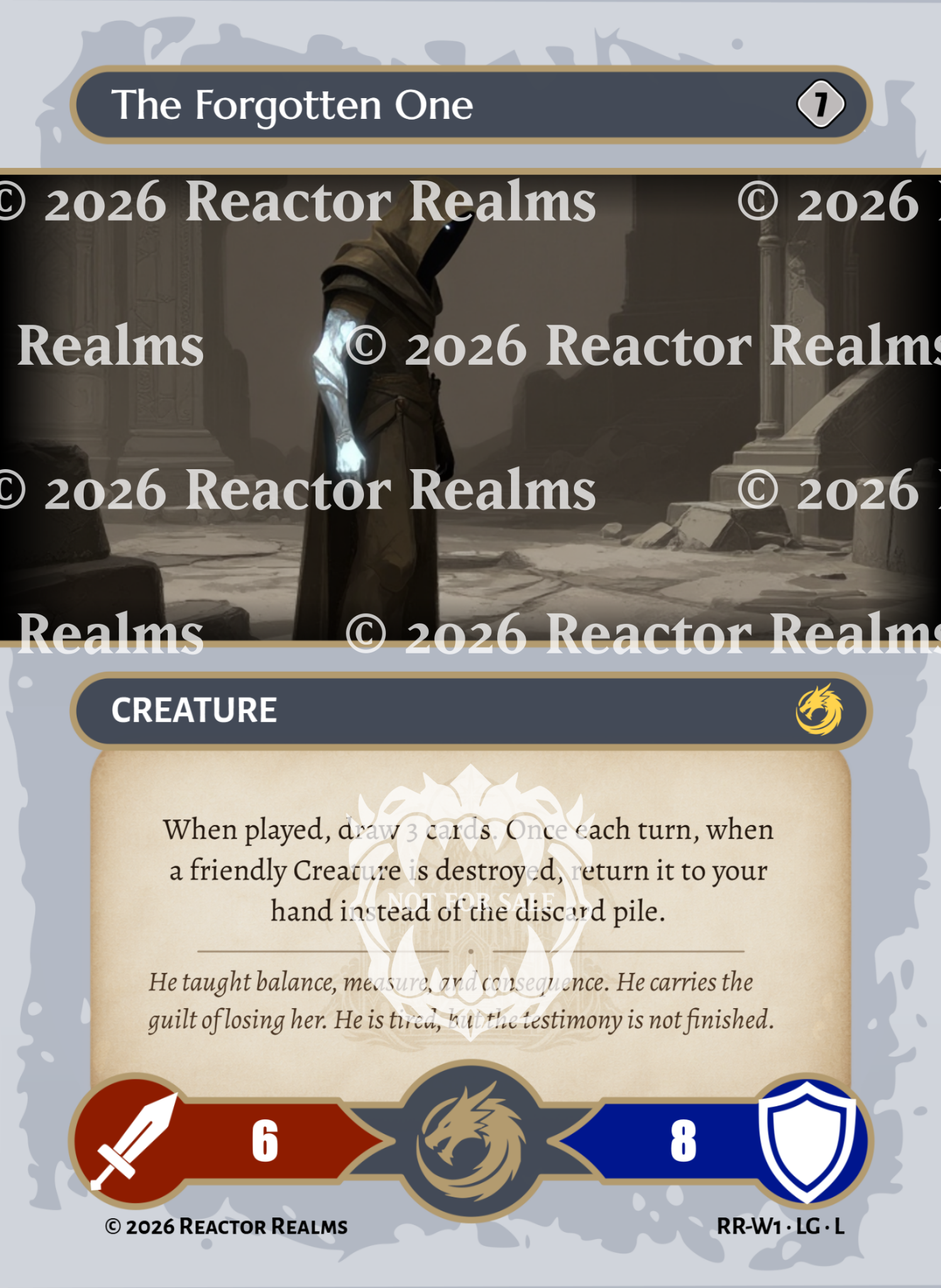
Legend cards exist in the full world, not the free Common-only deck preview.
The public print-and-play decks focus on Common cards so new players can learn the system. Legends belong to the wider Reactor Realms release and can still appear here as lore-facing previews.
Combat
The attacker declares attackers. The defending player assigns blockers. Creature combat damage is simultaneous.
- If damage dealt to a creature is at least its DEF, that creature is defeated.
- Surviving attacking damage can pressure a defender-chosen Settlement.
- Damage beyond the Settlement's DEF can reach the shared Dragon / Silverpool life total.
- Newly summoned creatures cannot attack or use activated abilities until their next Ready / Untap, but they may defend during the opponent's turn.
- When a Settlement is destroyed, it becomes tapped/damaged and stays on the battlefield instead of being discarded.
Dragon Guardians & Blessings
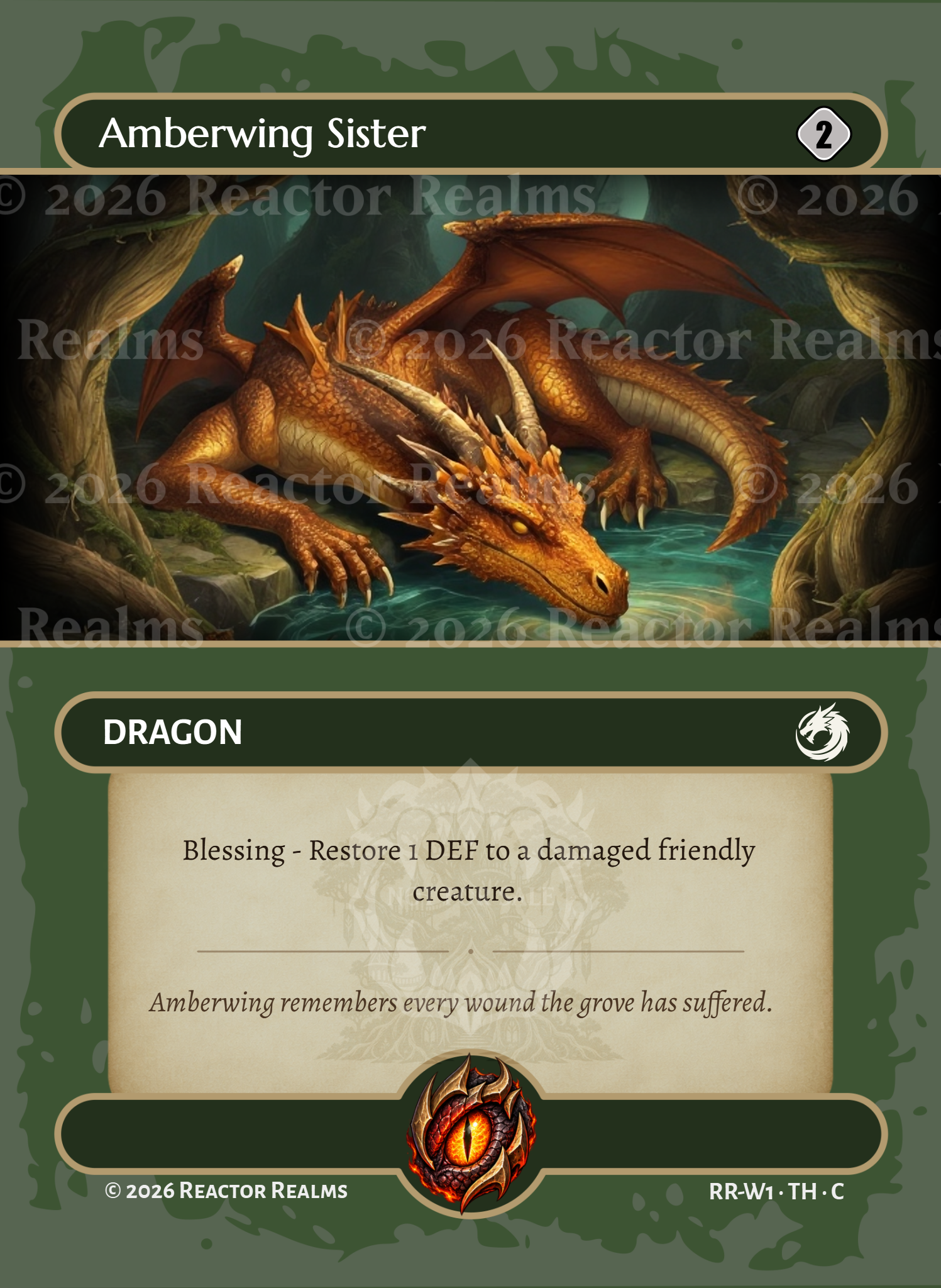
- Each faction uses two separate sleeping Dragon guardian cards.
- The two Dragons share one 20 HP total.
- Dragon Blessings cost AP and exhaust/tap the Dragon used.
- Only one Dragon Blessing total may be activated per player turn across the two Dragons.
- Dragons cannot be attacked while their controller still has creatures in play.
- Blessings may be used at legal timing windows after Untap / Upkeep and do not consume the normal Action Phase card play.
Silverpool Recall
Silverpool Recall happens when you are required to draw a card but cannot because your Silverpool is empty. An empty Silverpool by itself does not trigger Recall; the trigger is being unable to complete a required draw.
- Shuffle your discard pile — the discarded memories — back into your Silverpool.
- Take the current Silverpool Recall damage to your shared Guardian Dragon life total.
- Continue the turn through Untap / Upkeep and Mine normally.
- Skip the restricted Middle Phase for that turn: Build, Action, and Combat.
- Proceed to End Phase, then End.
Lore: the Silverpool is the world's living source of memory — what has come before and what is still to come. A Recall reintegrates discarded memories into that living source; it is not the recovery of discarded Silver.
Deck Construction
- Current First Clash faction deck: 42 cards total.
- 2 of the 42 cards are Guardian Dragons. Set them aside during setup; the remaining 40 cards form the Silverpool.
- Settlements are normal Silverpool cards and are drawn normally; they are not a separate four-card setup pool.
- Maximum four Settlements on the battlefield.
- Construction limit remains 65 Deck Points for the current playtest framework.
- DP by rarity remains Common 1, Uncommon 2, Rare 3, Mythic 5.
- Current preview decks use 8 Reactors.
Every rules change stays traceable.
Reactor Realms now keeps an explicit playtest history. When a rule changes, the previous wording is preserved alongside the replacement and the reason for the change when known.