Mine the current
Realm-built Reactors make unstable energy usable without pretending it is harmless.

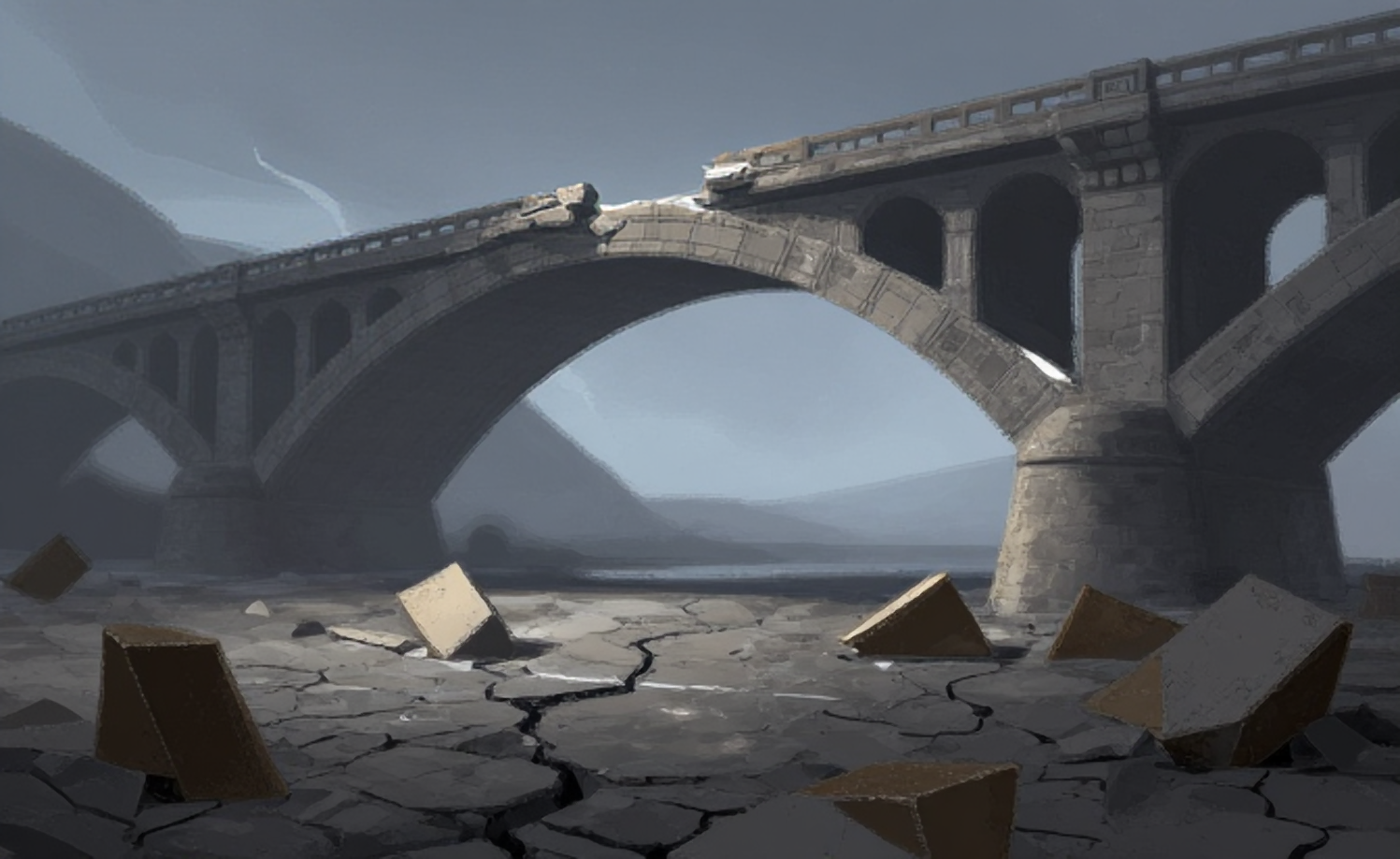
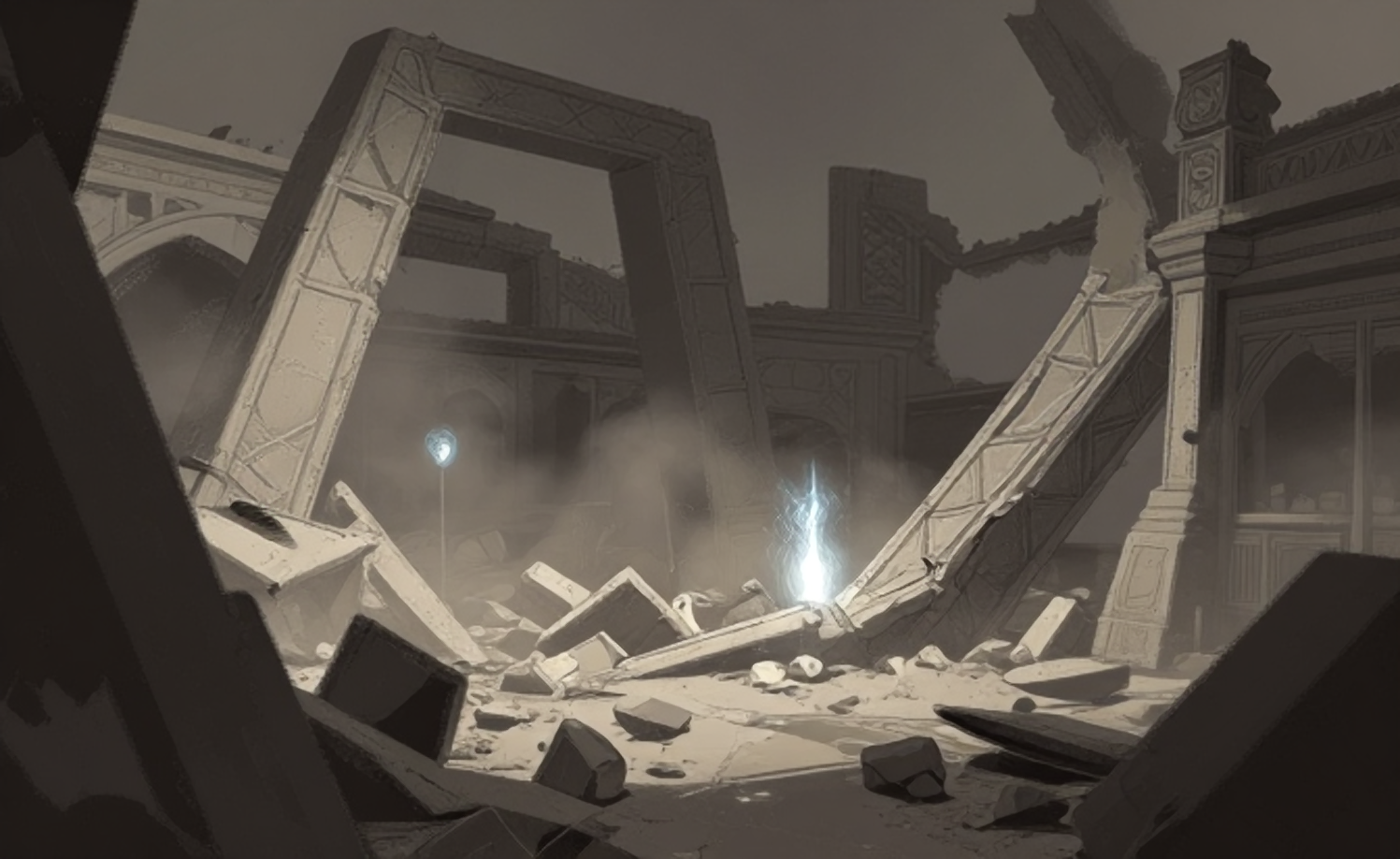
Reactor Realms begins in a world that has already broken. The people of the Great Reclaim inherit ruins, unstable Silverflow, dangerous Reactors, five competing Realms, and stories that no longer agree on what happened.
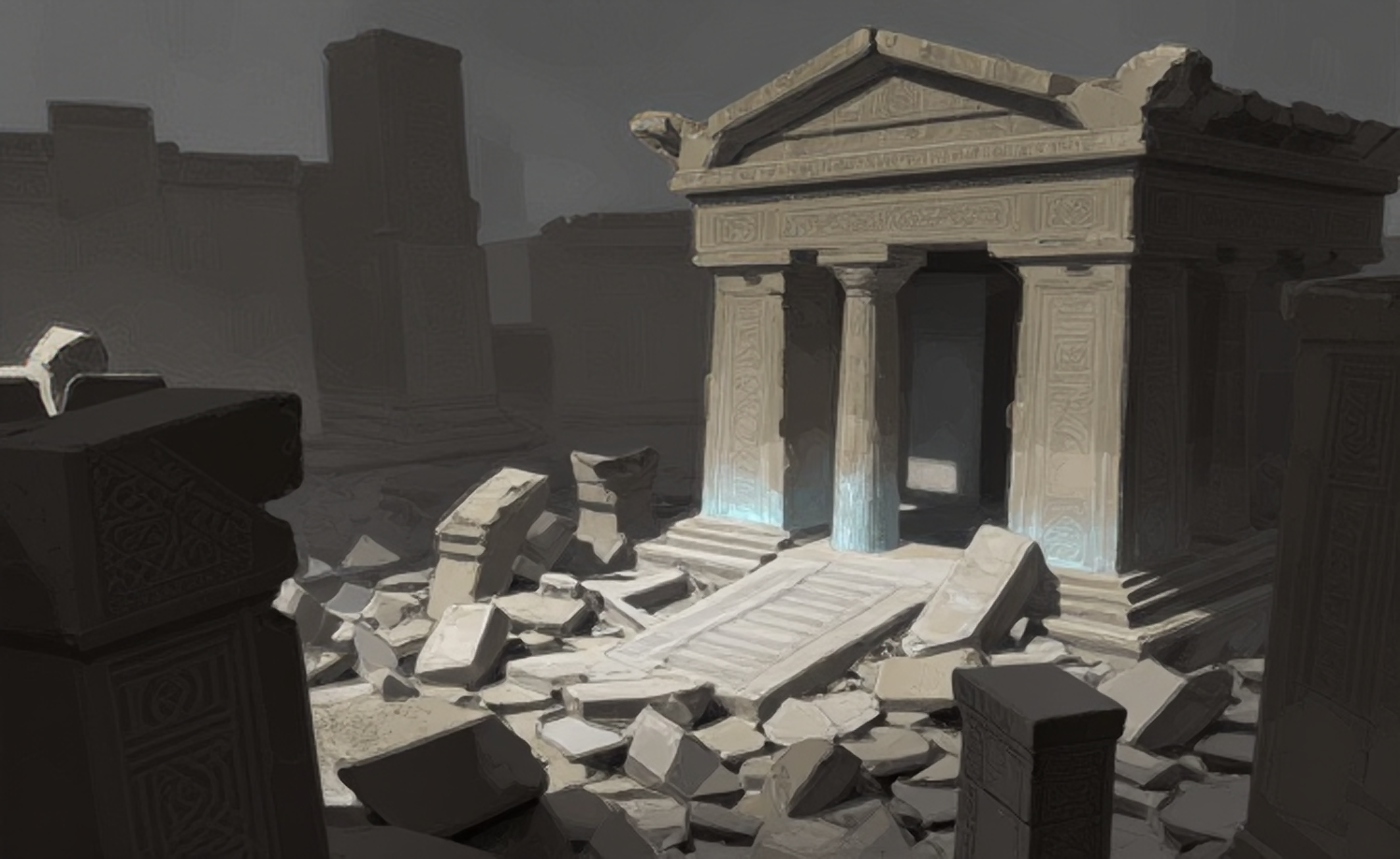
The Great Reclaim is the long rebuilding age after the Great Collapse. Roads end at ruptures. Old cities sit half-swallowed by new terrain. Settlements survive because someone is willing to repair a wall, guard a Reactor, recover a route, or carry supplies through a place the maps no longer understand.
There is no single surviving history of the Collapse. Every Realm inherited different records, different wounds, and a different explanation for why the world failed. That uncertainty is part of the setting: people are rebuilding the future while arguing over the past.
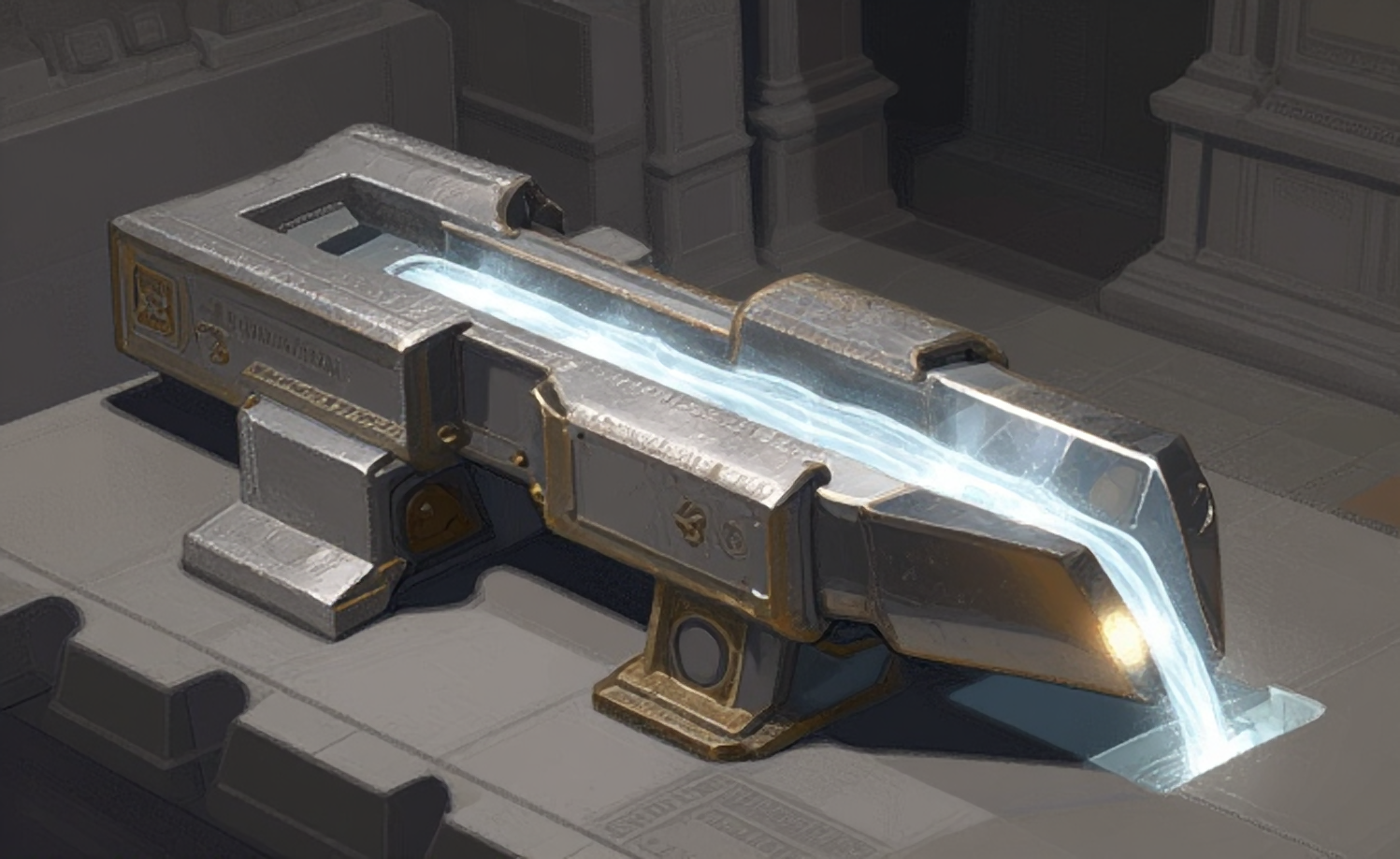
Silverflow is the older name preserved in sacred records and old workings. In the Great Reclaim, people also use Aether for the unstable, pressured current encountered in damaged land, relics, storms, and machinery.
No Realm agrees completely on what Silverflow is. Thornbound traditions speak of living balance. Gloomborn rites treat return and decay as part of the current. Duskforged engineers measure pressure. Sunshatter doctrine names radiance and order. Starweave reads patterns in what others call noise.
Whatever name is used, forcing too much through a broken place can turn useful energy into catastrophe.
Reactors are the machines the Great Reclaim depends on to handle unstable Aether. They vent, redirect, and stabilize dangerous pressure long enough for settlements and routes to function.
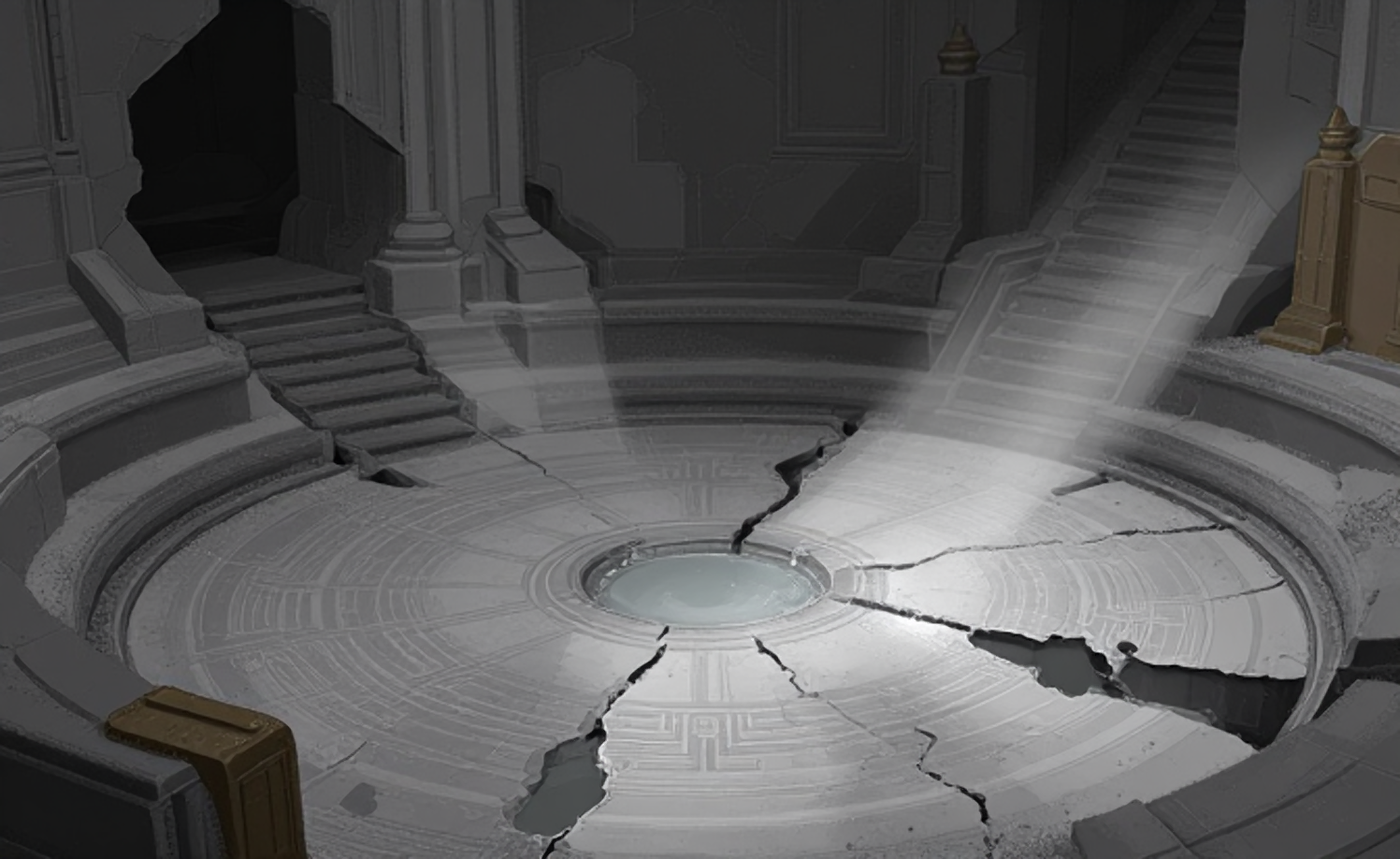
Realm-built Reactors make unstable energy usable without pretending it is harmless.
A settlement without working stabilization can lose light, defenses, routes, and access to surrounding land.
Silverflow surges are feared because the world beyond the machine is already wounded and unpredictable.
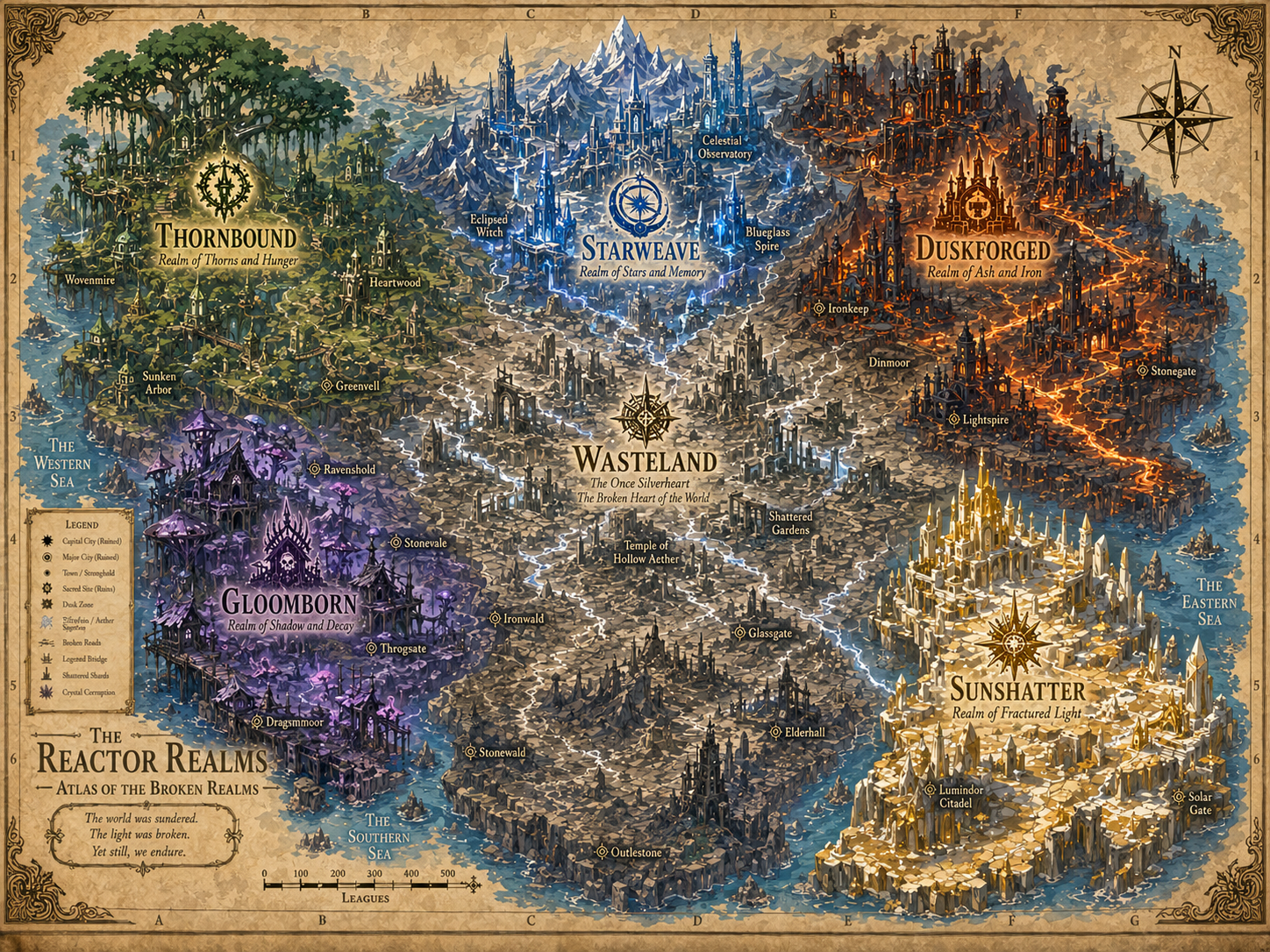
Each Realm has its own materials, beliefs, settlements, Reactor traditions, and answer to the question every survivor faces: what do we preserve when we cannot preserve everything?
 THE SACRED ROOTThornboundAmberlite roots, regrowth, living structures, and the belief that life should not be abandoned easily.
 THE PURPLE MIREGloombornBone, fungus, decay, hard survival, and a culture that refuses to waste what can still return.
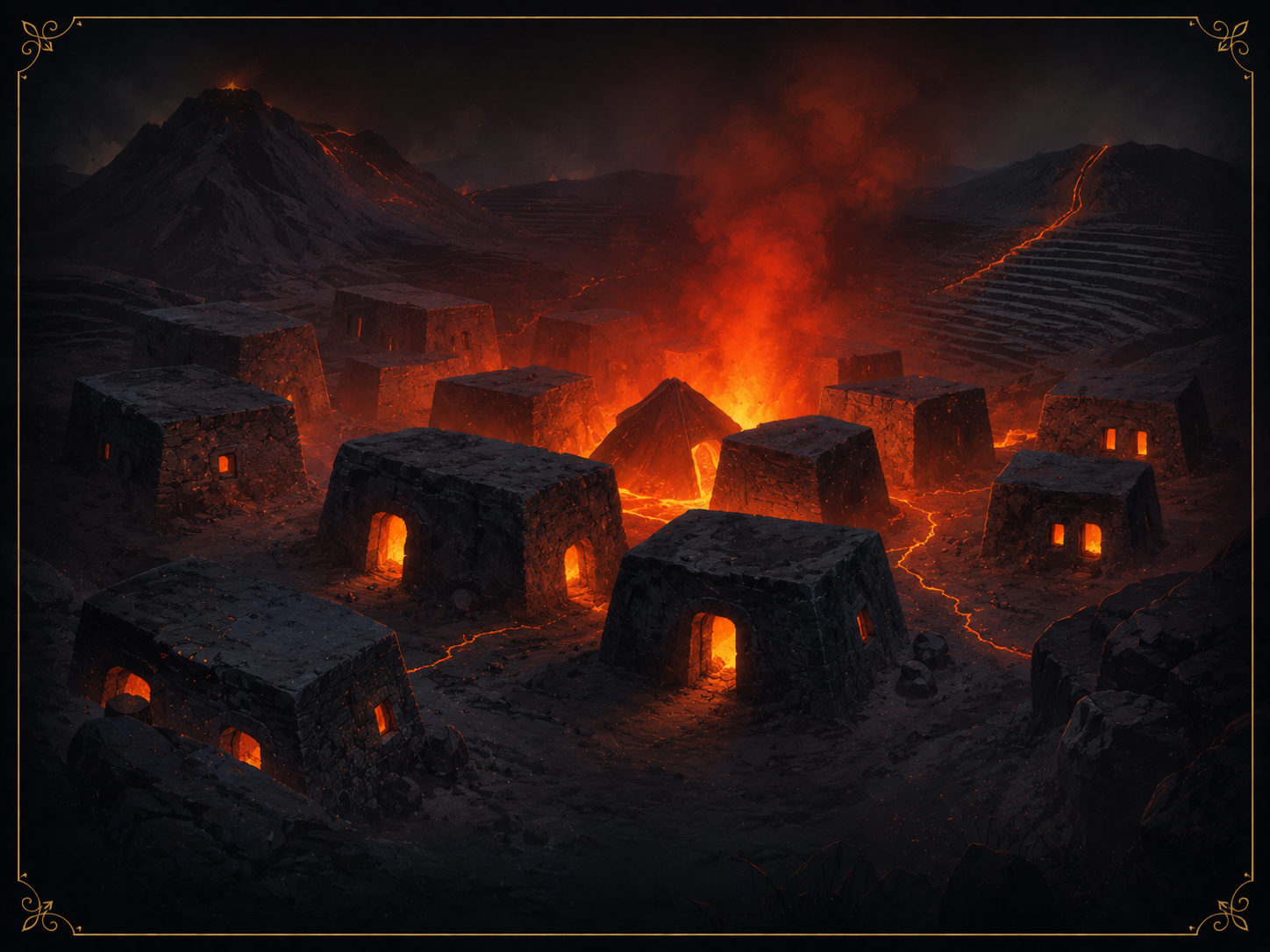 THE FORGEHOLDSDuskforgedIron, heat, craft, pressure, repair, and the conviction that endurance can be forged.
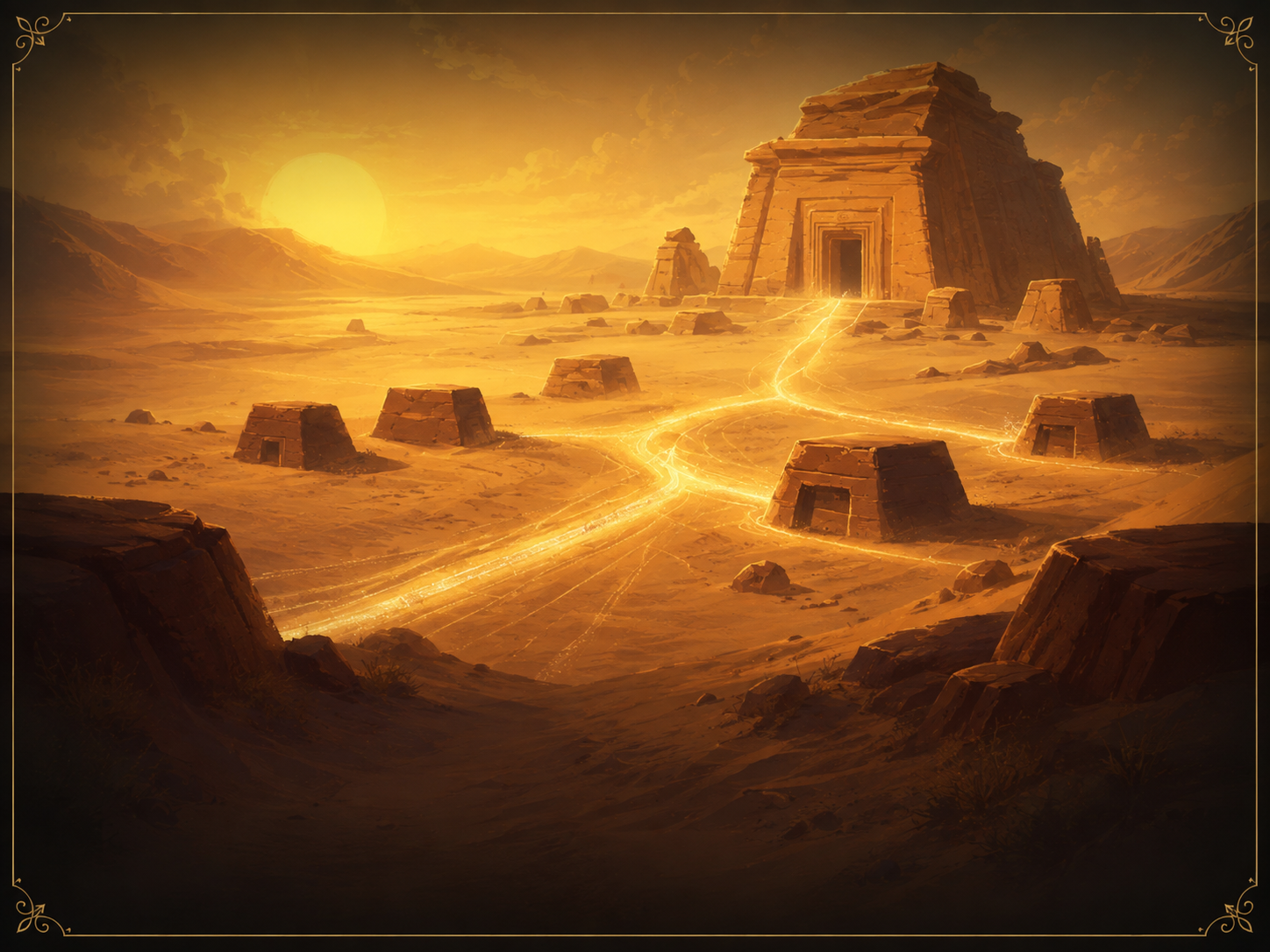 THE UNBROKEN DAWNSunshatterRadiant stone, discipline, civic order, conviction, and light used as both shield and standard.
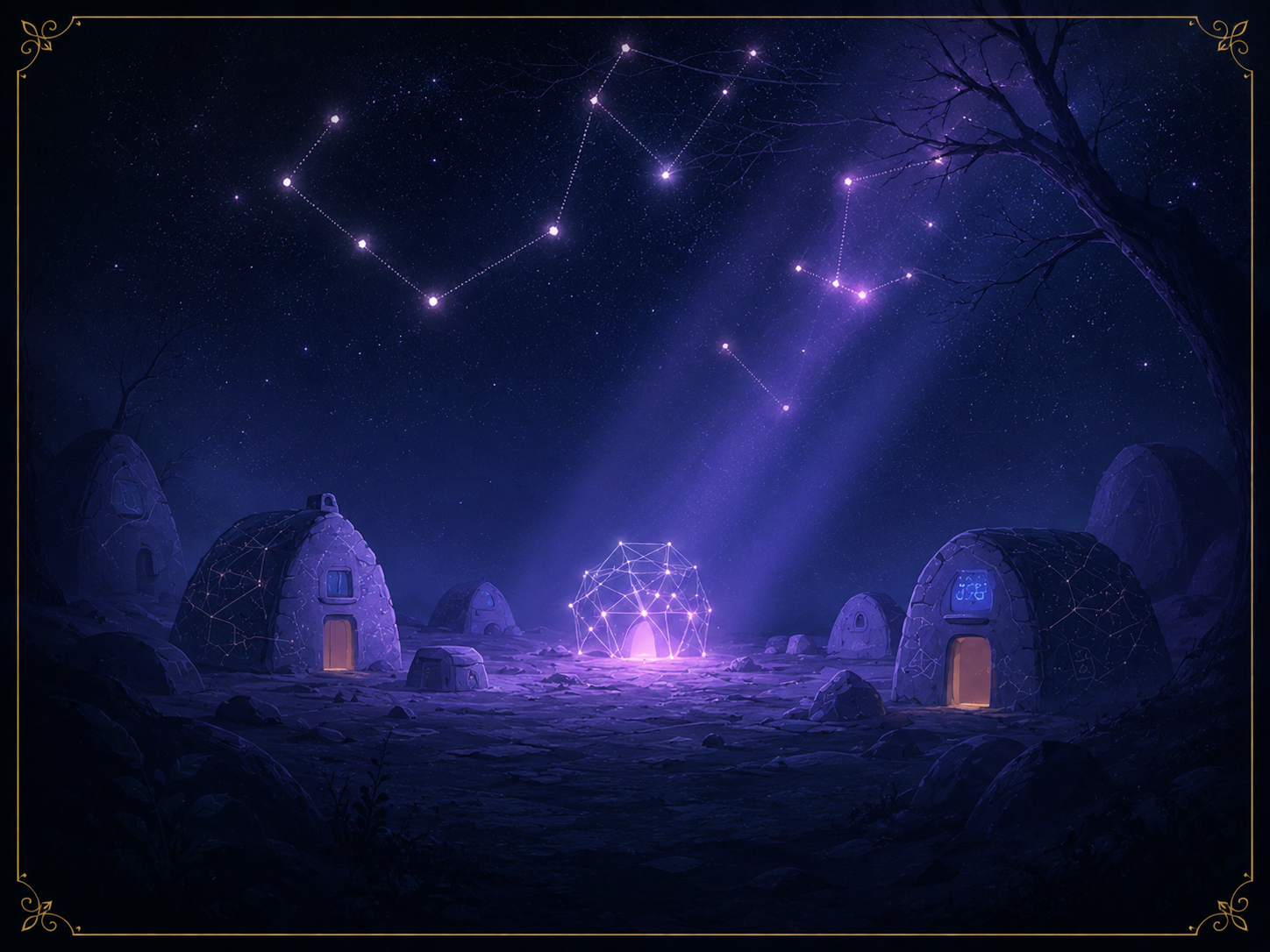 THE STARLINESStarweaveBlueglass, starlight, witness records, distant signs, and knowledge preserved against darkness.
The five Realms surround a broken central region remembered simply as the Wasteland. Routes vanish at its edge. Ruins appear where no current Realm claims them. Aether behavior becomes difficult to predict.
Every culture has a story about what the Wasteland was, who caused it, and what still remains there. None of those stories is presented here as the final answer.
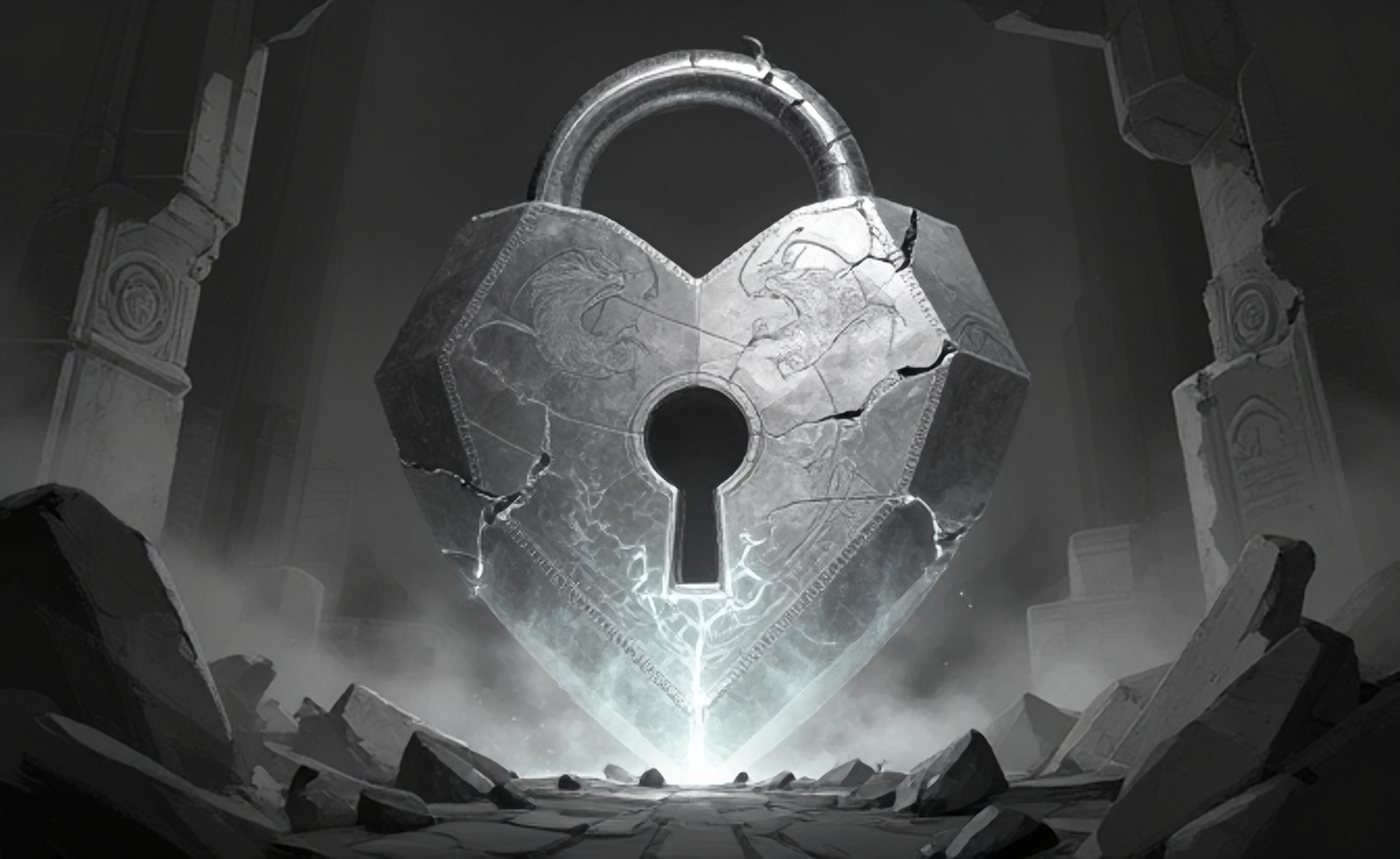
Relics are not random treasure. They are surviving devices, seals, vessels, structures, and practical tools from earlier ages. The Great Reclaim reuses them because abandoning useful knowledge is a luxury few settlements have.
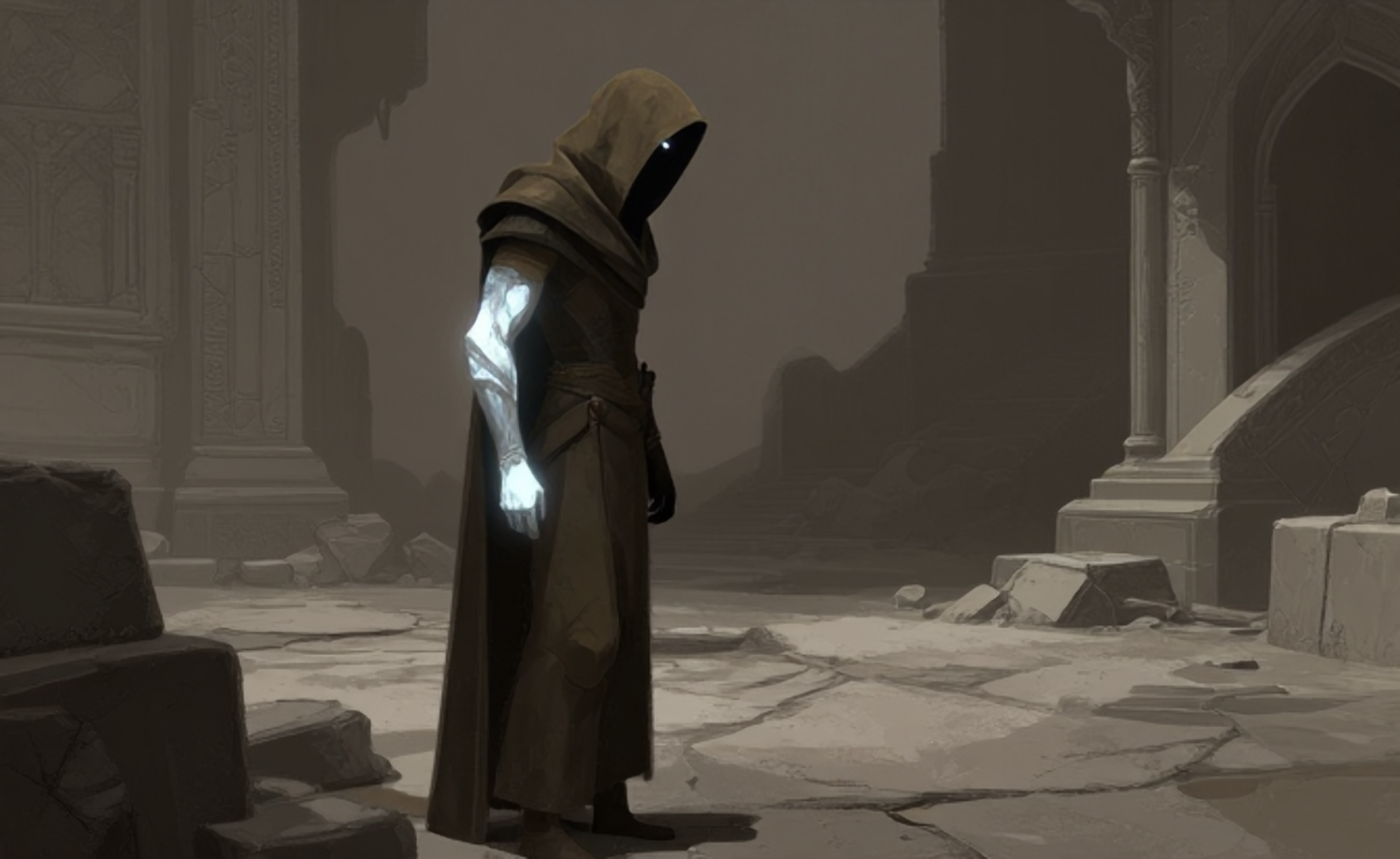
The Forgotten One appears in stories from more than one Realm: a hooded wanderer, a witness, a warning, a teacher, or a ruin-haunting myth depending on who is telling the tale.
The public archive does not resolve his identity. That is the rule for Legends here: show what the people of the Great Reclaim believe without giving away the deeper story behind the belief.
Every faction name, relic, legend, settlement, and creature is another recovered fragment. The deeper story exists, but the public lore keeps the mystery intact so the fiction can reveal it in its own time.